


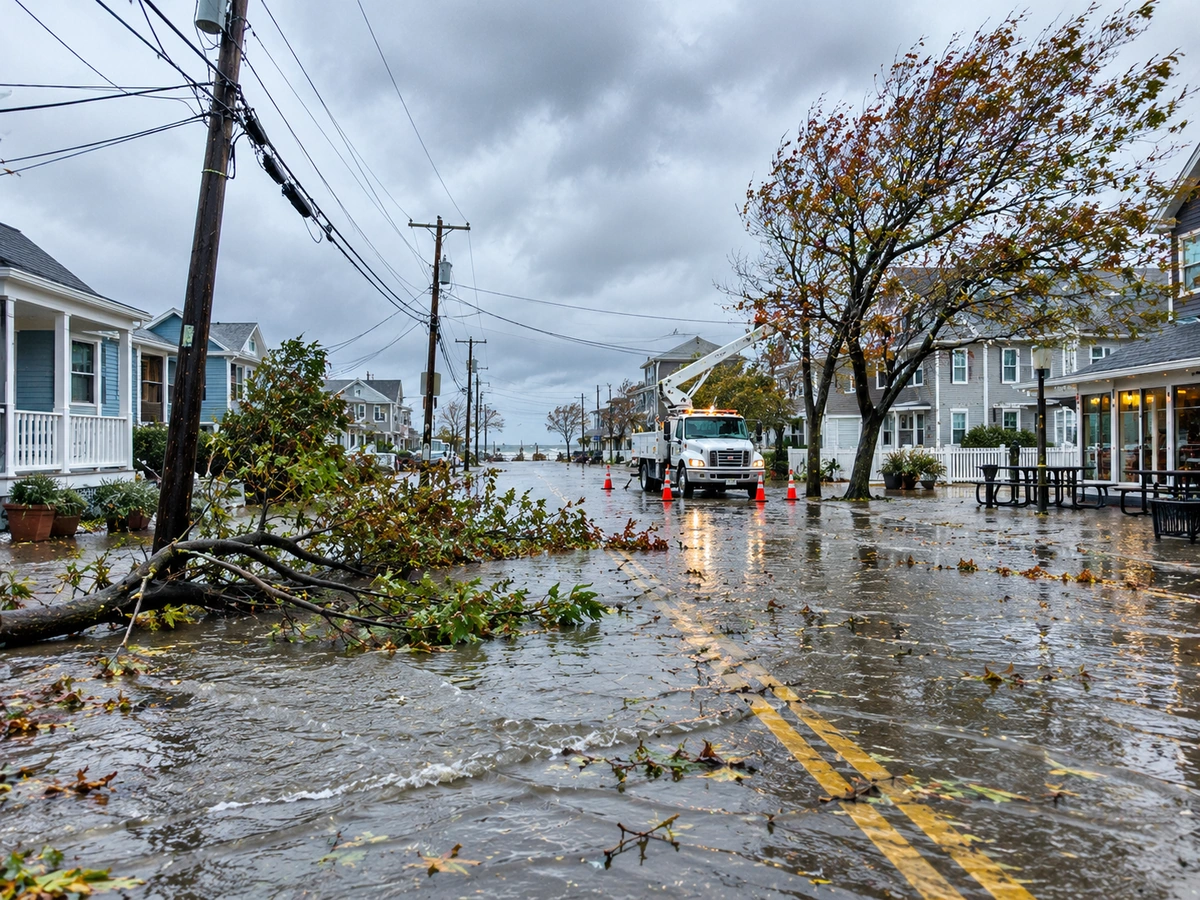

NEW YORK, November 27, 2026 — Thanksgiving storms left hundreds of thousands of Americans without electricity Thursday as powerful winds toppled trees, heavy rain flooded roads and unusually high tides pushed seawater into coastal communities. At the height of the disruption, approximately 961,000 utility customers across the United States were without power.
The Thanksgiving storm power outages were particularly severe across the eastern United States. Wind gusts reached up to 70 mph in some areas, while rising coastal waters stranded motorists and forced emergency crews to carry out rescues.
The storms also disrupted flights and prompted an unprecedented change to New York City’s holiday celebrations: the 100th Macy’s Thanksgiving Day Parade was postponed until Saturday.
For readers following the developing situation at DealInNow, the latest figures show how quickly the weather threat became a major transportation and infrastructure emergency.
Our earlier report on the Thanksgiving 2026 storm forecasts, damaging winds and coastal flooding explained the approaching weather hazards. The latest developments show how those warnings translated into widespread outages, flooding and cancelled travel plans.
TL;DR
Thanksgiving storms knocked out power to nearly 1 million U.S. utility customers at their November 26 peak. Strong winds, heavy rain and king tides flooded coastal neighborhoods, while hundreds of flights were canceled. New York City’s Macy’s parade was postponed until November 28. Power restoration and transportation disruptions remain important concerns as Friday begins.
Key Takeaways
- Approximately 961,000 utility customers experienced outages at the Thursday evening peak.
- Wind gusts reached up to 70 mph in parts of the eastern United States.
- FlightAware recorded 454 U.S.-related cancellations and 2,411 delays in Reuters’ Thanksgiving Day report.
- Coastal flooding affected communities from North Carolina through New Jersey.
- California’s Pacifica Pier sustained major damage during a separate episode of extreme tides and high surf.
Thanksgiving Storm Power Outages Approach 1 Million
The storm’s most widespread immediate impact came from electrical outages.
According to Reuters, data from PowerOutage.us showed approximately 961,000 U.S. utility customers without electricity at 7:30 p.m. Eastern Time on Thursday.
By 9:56 p.m., the figure had decreased to just over 908,000.
That decline suggests some customers had regained service, although the figures do not establish when power would return to every affected community.
Which States Were Hit Hardest?
The outage data showed widespread disruptions across several states.
| State | Customers without power |
|---|---|
| Pennsylvania | More than 207,000 |
| New Jersey | More than 179,000 |
| Maryland | Approximately 139,000 |
| Virginia | Approximately 106,000 |
| Missouri | Approximately 100,000 |
| New York | More than 68,000 |
These are reported outage snapshots from Thursday night, November 26, not current live totals.
Strong winds caused trees and branches to fall onto utility lines, while saturated ground increased the likelihood of trees becoming uprooted.
For households hosting Thanksgiving meals, the outages created immediate challenges involving refrigeration, heating, lighting and food preparation.
Utility crews began restoration work, but damage involving fallen trees and electrical infrastructure can require extensive repairs before electricity is safely restored.
Coastal Flooding Inundates New Jersey and Other East Coast Communities
The storm brought particularly dangerous conditions to communities along the Atlantic coast.
Heavy rainfall combined with strong onshore winds and unusually high tides, sending seawater into streets and neighborhoods.
Ocean City, Sea Isle City and Avalon in New Jersey experienced significant flooding.
In Avalon, local officials described some of the worst flooding the community had encountered.
Floodwater covered roads, carried debris into streets and left some drivers stranded after they attempted to travel through flooded areas.
Emergency personnel also responded to water rescues in New York City and other affected communities.
The storm’s effects stretched farther south.
In North Carolina, seawater breached dunes along the Outer Banks, forcing the closure of portions of NC 12, an important highway connection serving Hatteras Island.
Strong winds also forced the temporary closure of the Chesapeake Bay Bridge-Tunnel in Virginia.
These disruptions demonstrate how coastal flooding can affect transportation even when the most intense rainfall occurs elsewhere.
How King Tides Made Thanksgiving Flooding More Dangerous
King tides occur when astronomical conditions produce particularly high tides.
They can happen without a storm, but their effects become more dangerous when powerful winds and large waves arrive at the same time.
During Thursday’s coastal storm, strong winds pushed seawater toward the shoreline as elevated tides reduced the ability of water to drain away.
That combination contributed to flooding in vulnerable communities along the Eastern Seaboard.
Low-lying roads, waterfront businesses and residential neighborhoods faced some of the greatest risks.
In some locations, water reached streets that are normally accessible during ordinary high tides.
Officials warned that additional high-tide cycles could prolong flooding even after the strongest winds began to weaken.
California’s Pacifica Pier Suffers Major Damage
On the opposite coast, California experienced a separate period of dangerous king tides and high surf.
On Wednesday, November 25, powerful waves destroyed a substantial section of the Pacifica Municipal Pier near San Francisco.
The damage was documented by KQED.
Flooding also affected portions of Marin County, while some coastal communities faced evacuation warnings.
The Pacific Coast flooding should not be confused with the Atlantic storm’s direct impacts. The events occurred during the same holiday period but involved different regional weather conditions.
Thanksgiving Flight Cancellations Disrupt Holiday Travel
Air travel was another major casualty of the severe weather.
FlightAware reported 454 flights canceled and 2,411 delayed across U.S.-related operations during the Thanksgiving Day reporting period cited by Reuters.
Airports serving Washington, D.C., and New York City were among those experiencing significant disruptions.
Strong crosswinds, heavy rainfall and reduced visibility complicated airport operations.
At New York’s LaGuardia Airport, wind gusts reached 56 mph Thursday afternoon, according to city emergency management information reported by Reuters.
Airlines can delay departures, suspend ground operations or cancel flights when weather conditions make safe operations difficult.
Travelers with connecting flights may also experience disruptions even when conditions at their departure airport are relatively calm.
Passengers flying on Friday or during the return-travel period should check their individual flight status rather than relying solely on nationwide cancellation totals.
The Thanksgiving figures represent a historical snapshot, and additional cancellations or improvements may occur as conditions change.
Macy’s Thanksgiving Day Parade Postponed Until Saturday
One of the storm’s most visible consequences was the postponement of New York City’s annual Macy’s Thanksgiving Day Parade.
The event was originally scheduled for Thursday, November 26.
After reviewing the dangerous wind forecast, Macy’s and New York City officials announced that the parade would instead take place on Saturday, November 28.
The new starting time is 8:30 a.m. Eastern Time.
It is the first weather-related postponement in the parade’s history.
Officials were particularly concerned about the enormous character balloons, which can become difficult to control during high winds.
New York City Mayor Zohran Mamdani said the decision was made in coordination with Macy’s, police and other agencies responsible for public safety.
The postponement illustrates the extraordinary nature of the storm, which disrupted not only transportation but also one of America’s best-known Thanksgiving traditions.
What Conditions Look Like on Friday, November 27
Forecasters expect the most intense weather to ease across portions of the Mid-Atlantic as the coastal system continues moving away.
However, Friday may remain breezy, with additional showers and lingering flooding concerns in some locations.
In New York City, the early Friday forecast calls for mostly cloudy skies, scattered showers and temperatures reaching the upper 50s Fahrenheit.
Residents should not assume that improving skies mean every road is safe.
Standing water, damaged infrastructure, fallen trees and power lines may continue to create hazards after a storm passes.
Utility restoration efforts and local road closures may also extend beyond the period of strongest winds.
Travelers heading home over the weekend should monitor their routes and transportation providers for updates.
What Residents Should Do After the Storm
Anyone returning to a home or business affected by flooding should avoid entering standing water if electrical equipment may have been exposed.
Stay away from downed power lines and report them to the appropriate utility or emergency service.
Never operate portable generators inside homes, garages or near open windows because of carbon monoxide risks.
Drivers should avoid flooded roads, even when the water looks shallow.
Travelers should also verify airport and highway conditions before departure and allow additional time for possible disruptions.
For neighborhood-specific warnings, the National Weather Service provides updated alerts at weather.gov.
Power Restoration and Weekend Travel Remain the Next Challenges
The Thanksgiving storm has already left a significant mark on the 2026 holiday travel season.
Nearly a million utility customers experienced outages at the peak, coastal towns faced damaging floods, flights were disrupted and the Macy’s parade was pushed back two days.
Although the strongest conditions are expected to ease in many areas, the effects will continue for residents waiting for electricity, cleaning up flood damage or trying to complete interrupted journeys.
The next important developments will be updated power restoration figures, the reopening of affected roads and transit routes, and whether improving weather allows Saturday’s parade to proceed as rescheduled.
Weather Disclaimer: This article is a timestamped news report, not a continuously monitored live feed. Outage totals, transportation disruptions, warnings and forecasts can change rapidly. Follow local emergency officials, utility providers and the National Weather Service for current safety information.