


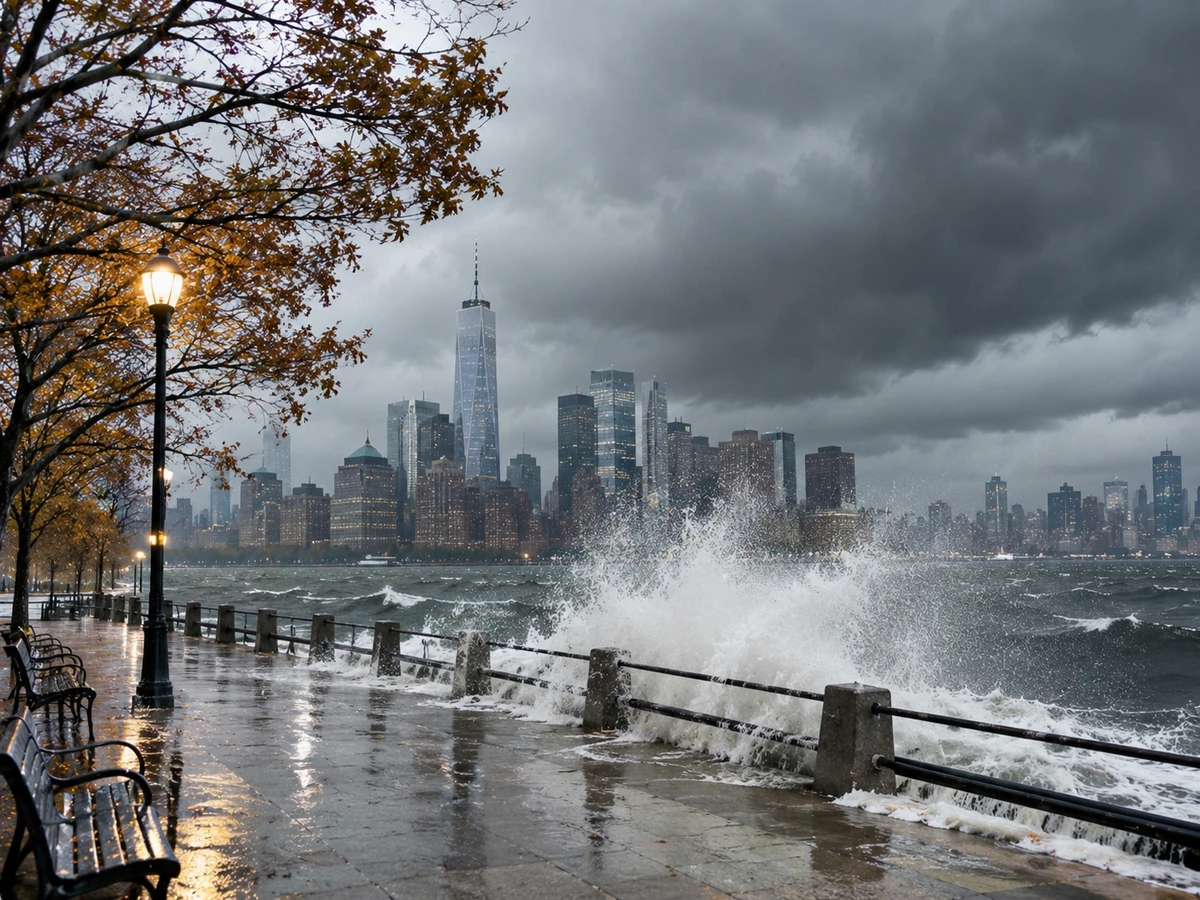

NEW YORK, November 25, 2026 — Powerful Thanksgiving storms 2026 are creating dangerous travel conditions across the United States, with heavy rain, damaging winds, coastal flooding and snow threatening millions of Americans during one of the busiest holiday travel periods of the year.
A rapidly strengthening coastal storm is expected to move north along the Eastern Seaboard on Thanksgiving Day, November 26. Meanwhile, the Midwest faces potentially disruptive snowfall, and another Pacific weather system is bringing rain and mountain snow to parts of the West.
FOX Weather estimates that the broader storm pattern could affect more than 250 million people nationwide. That figure represents a wide geographic estimate of potential impacts, not the number of Americans under official severe-weather alerts.
For travelers following the latest weather and transportation developments at DealInNow, the most important question is where conditions are expected to become dangerous—and when.
TL;DR
Thanksgiving storms are bringing widespread travel hazards to the United States. The National Weather Service warns of heavy rain, powerful winds, coastal flooding and possible power outages across the East, while Missouri and Illinois face accumulating snow. Another system is affecting the Pacific Northwest. Conditions could change rapidly through November 27.
Key Takeaways
- FOX Weather estimates more than 250 million people could experience effects from the nationwide weather pattern.
- Wind gusts of 50–60 mph or higher are possible in parts of the Eastern U.S.
- Heavy rain and unusually high tides threaten coastal flooding from the Southeast into New England.
- Parts of Missouri and Illinois could receive 6–9 inches of snow.
- Thanksgiving travel, airport operations and New York City’s Macy’s parade could face disruptions.
Thanksgiving Storms 2026: Latest Weather Updates
November 25 — Coastal Storm Intensifies Ahead of Thanksgiving
The National Weather Service Weather Prediction Center says a low-pressure system developing near the Southeast coast will intensify as it moves north.
Its November 25 forecast highlights excessive rainfall risks along the Carolina coast, with additional concerns expanding into the northern Mid-Atlantic on Thanksgiving.
The greatest threat is not rainfall alone.
Strong winds pushing ocean water toward land, combined with unusually high astronomical tides, could create significant coastal flooding and beach erosion.
November 25 — More Than 44 Million Under Weather Alerts
CBS News reported Wednesday that more than 44 million people were under weather alerts as powerful winds threatened parts of the Eastern United States.
Some areas could experience gusts approaching 70 mph, according to the forecast information cited in that report.
Those alerts cover specific hazardous locations and should not be confused with the much larger 250-million-person figure used to describe the potential nationwide reach of the storm pattern.
November 26 — Thanksgiving Day Expected to Bring Peak Impacts
Forecasters expect the Eastern storm to reach the Mid-Atlantic, Ohio Valley and Northeast on Thursday.
Strong winds, soaking rain and coastal flooding could make driving hazardous and disrupt airline schedules.
Some communities could also experience falling tree limbs and power outages.
Conditions may remain unsettled into Friday, November 27.
East Coast Faces Powerful Winds and Dangerous Coastal Flooding
The storm’s strongest impacts are expected along parts of the Atlantic Coast.
According to the National Weather Service, rainfall totals of 1–4 inches are possible across the Carolinas and Mid-Atlantic, while southern New England could receive 1–2 inches.
Coastal wind gusts exceeding 50 mph are expected in some locations, with potentially damaging gusts extending inland.
These conditions could lead to blocked roads, falling trees and interruptions to electrical service.
Coastal flooding is an additional concern.
Strong onshore winds can push seawater toward beaches, bays and low-lying neighborhoods. When those winds coincide with exceptionally high tides, water levels can rise enough to flood roads and properties.
Parts of Georgia, the Carolinas, Virginia, Delaware, New Jersey and Long Island are especially vulnerable.
Motorists should avoid flooded coastal roads even when water appears shallow.
New York City Prepares for Rain, Flooding and 60-Mph Gusts
New York City officials have issued weather alerts ahead of Thanksgiving.
The city’s emergency management agency initially forecast gusts of 45–55 mph, along with 1–2 inches of rain and coastal flooding.
Subsequent National Weather Service alerts warned that gusts could reach 60 mph.
A High Wind Warning is in effect from 10 a.m. Thursday until 1 a.m. Friday, while coastal flooding warnings cover vulnerable parts of the city.
The highest coastal water levels are expected around Thursday’s morning and evening high tides.
Residents near Jamaica Bay, the waterfront and other flood-prone neighborhoods should monitor official alerts.
The city’s emergency management department has advised people to secure outdoor objects, charge electronic devices and avoid traveling during the worst conditions when possible.
Will the Thanksgiving Storm Affect Macy’s Parade Balloons?
The approaching storm has also raised concerns about the 100th Macy’s Thanksgiving Day Parade.
The celebration is scheduled for Thursday, November 26, in Manhattan.
However, strong winds could affect how giant character balloons are operated.
Under applicable New York City safety restrictions, sustained winds of 23 mph or gusts of 34 mph can prevent balloons from flying.
The forecast makes changes to the balloon lineup or operating height possible.
That does not establish that the parade itself has been canceled.
Officials will assess conditions and make operational decisions based on safety requirements.
Midwest Snow Threatens Thanksgiving Road Travel
While heavy rain dominates much of the Eastern forecast, parts of the Midwest face a different problem.
Winter storm warnings and advisories have been issued for portions of Missouri and Illinois.
Forecasts indicate that some areas near St. Louis could receive 6–9 inches of snow.
Snow accumulation may make roads slippery, particularly on bridges, overpasses and untreated surfaces.
The weight of wet snow could also damage tree limbs and power lines.
Travelers driving through eastern Missouri, southwestern Illinois and nearby communities should monitor road conditions before departure.
Even relatively short journeys could become difficult if snow begins accumulating rapidly.
Pacific Northwest Braces for More Rain and Mountain Snow
A separate weather system is affecting the Western United States.
The National Weather Service expects another Pacific front to bring rain into the Northwest on Thanksgiving, with snow developing in higher elevations.
Washington, Oregon, Idaho and portions of the Northern Rockies may experience wet roads, mountain travel disruptions and changing conditions.
Parts of the West Coast are also dealing with coastal flooding associated with high astronomical tides.
Those flooding events are not necessarily caused by the same storm system affecting the Eastern Seaboard.
Travelers should pay attention to local forecasts rather than treating the national weather pattern as one continuous storm.
Thanksgiving Flight Delays Could Affect Major U.S. Airports
The storm threat comes as millions of Americans travel for Thanksgiving.
AAA projects approximately 81.5 million people will travel at least 50 miles from home during the holiday period, including nearly 73 million traveling by road.
The Transportation Security Administration expects to screen approximately 17.6 million passengers between Tuesday and Monday.
Heavy rain, snow, strong crosswinds and reduced visibility could complicate airport operations.
Weather-related delays are possible at major hubs in the Northeast, including New York-area airports, Boston, Philadelphia and Washington, D.C.
Midwestern airports such as St. Louis and Chicago may also experience disruptions, depending on local conditions.
However, a weather forecast is not confirmation that a specific flight has been canceled.
Travelers should check the airline’s flight status directly before leaving home.
Where the Worst Travel Disruptions Are Expected
| Region | Main weather concerns | Highest-risk period |
|---|---|---|
| Southeast and Carolinas | Heavy rain, severe storms, coastal flooding | Wednesday–Thursday |
| Mid-Atlantic | Damaging winds, rain, tidal flooding | Thursday |
| New York and New England | Strong winds, rain, coastal flooding | Thursday–Friday |
| Missouri and Illinois | Accumulating snow, slick roads | Wednesday–Thursday |
| Pacific Northwest | Rain, mountain snow, coastal concerns | Wednesday–Friday |
These are forecast windows, not confirmed closures or delay reports. Local warnings take precedence over regional summaries.
How to Stay Safe During Thanksgiving Storms
Travelers and residents can reduce their risk by taking several practical precautions.
Check the National Weather Service forecast for your destination and the roads along your route. Conditions may vary substantially between neighboring counties.
Avoid driving through floodwater. Even shallow moving water can make a vehicle difficult to control.
If your area is under a high wind warning, secure outdoor furniture, decorations and other loose objects.
Keep phones charged, prepare for possible power outages and stay away from downed electrical wires.
Travelers crossing areas under winter storm warnings should carry warm clothing, water and emergency supplies.
Anyone receiving an evacuation order or other instruction from local emergency officials should follow it promptly.
What Happens After Thanksgiving?
The Eastern storm is expected to continue affecting parts of the Northeast and Ohio Valley into Friday before conditions gradually improve.
The Pacific Northwest may remain unsettled, while additional rain could develop in parts of the South and Midwest later in the holiday weekend.
Travelers returning home on Sunday, November 29, should check fresh forecasts rather than assuming Thursday’s conditions will persist unchanged.
Although the national impact estimate is unusually large, the most serious hazards are concentrated in particular places and time windows.
The latest warnings from the National Weather Service, local emergency officials and transportation providers will determine where additional precautions are necessary.
Weather and Travel Disclaimer: This article is a forecast-based news update, not a continuously monitored live feed. Weather warnings, rainfall totals, wind speeds, snow forecasts and transportation conditions can change. For immediate safety decisions, consult weather.gov, local emergency management authorities and your transportation provider.
Verified Sources
NOAA — Official Thanksgiving Weather Outlook Thanksgiving week storm forecast
National Weather Service — Weather Prediction Center November 25 short-range forecast discussion
New York City Emergency Management NYC Thanksgiving rain, wind and flooding warning
Associated Press — Holiday Travel Conditions Airports and highways face Thanksgiving weather disruptions
FOX Weather — Nationwide Impact Estimate Thanksgiving storms could affect over 250 million